Your Bank Account Also Needs Therapy
Your negative balance might reflect childhood financial trauma. Discover how your emotions control your money and how healing your soul heals your wallet.

Why sometimes a negative balance is just unresolved longing in disguise.
Grab your coffee (or chamomile tea, depending on how your credit card statement looked this month).
Let’s talk real, but without the stress.
Have you ever noticed that your money behaves exactly like that ex you swear you’re over?
It disappears without warning, shows up when you least expect it, and most of the time leaves you with that strange feeling of “where did I go wrong?”
Well, here’s the thing: we think we’re short on money because the economy is rough (and yeah, it doesn’t help), but the truth is, sometimes the hole in your pocket is just a reflection of the hole in your heart.
Even market trends have picked up on this vibe. Recent data shows that 77% of people feel economic news directly impacts their purchasing decisions, making us far more selective about where we put our energy (and our money). In other words, collective anxiety is making us hold onto our wallets tighter—but are we holding on for the right reasons?
The “Inside Out” of Your Wallet
We create a “mental model” about money back in childhood. Remember that time you wanted those light-up sneakers and heard “maybe next time”?
That may have created a trauma window.
Today, as a full-grown adult (I hope), you might be operating in three modes that are pure emotional economics:
The Emotional Compensator
You had a terrible day at work, your boss was a nightmare, and your inner child screams: “I deserve that $80 takeout on a Tuesday!” You’re not buying sushi—you’re buying comfort. Money tries to fill a hole that, spoiler alert, has no bottom.
The Prisoner of the Past
Remember those light-up sneakers? Now you buy three pairs of shoes a month. Not because you need them, but to prove to that 8-year-old version of you that you can now. It’s revenge against past scarcity, financed in monthly installments.
The Applause Seeker
This one’s classic. Money becomes a “Master” instead of a “Servant.” We spend what we don’t have to buy what we don’t need to impress people we don’t even like (or who don’t even notice us).
The Ego creates the debt, the Unconscious sends the bill.
So how do we break out of this “earn, spend, cry” cycle?
The cure isn’t (just) in the spreadsheet, but in rewriting this internal script. Here’s a therapeutic and financial prescription to stick on your fridge:
Heal the Soul to Heal the Wallet
External prosperity mirrors internal state. If you’re chaos inside, your account will be chaos outside. Emotional intelligence is the new Bitcoin.
Name Your Money’s Purpose
Money without direction gets lost along the way. The Universe funds projects, not random whims. Have a clear dream. Want to travel? Want to study? Give each dollar a purpose, or they’ll run off to the land of “I deserve this.”
Gratitude Isn’t Just a #Hashtag
Strategically, being grateful for what you have today trains your brain to manage “abundance” tomorrow. If you’re not happy with little, you won’t be happy with much. Enjoyment has to happen now, not just “when I get rich.”
Generosity Is Power
When you give, you tell your brain: “I have enough. I’m not a slave to this.” Generosity breaks scarcity and feeds that spiritual part no black card can fill.
The Bottom Line
There’s no point blaming inflation if the hole is emotional. Financial success is, first and foremost, an internal cleanup.
So next time you’re about to swipe that card, ask yourself the million-dollar question: “Who’s buying this? My adult necessity or my childhood wound?”
Sometimes, we just wanted a hug but ended up buying a shirt instead. And that’s okay, as long as we notice and learn to hug ourselves for free too.
Is your bank account in the red? Maybe it’s not just about money. Maybe it’s about missing emotional connection.
If this post made you look at your statement differently, imagine what an entire book on this could do. When you check your balance and feel that tightness in your chest, it might not just be the debt suffocating you. It’s that child who once heard “we can’t afford it” and decided, in silence, that when they grew up, they’d never deprive themselves again.
The problem? They grew up. Got a credit card. And now they’re compensating for 20 years of “no” with endless installments.
Morgan Housel wrote the manual you needed to understand why your relationship with money is so complicated. And no, it’s not another budgeting spreadsheet. It’s psychology meets finance.
The book that will change how you see money (and yourself)
-
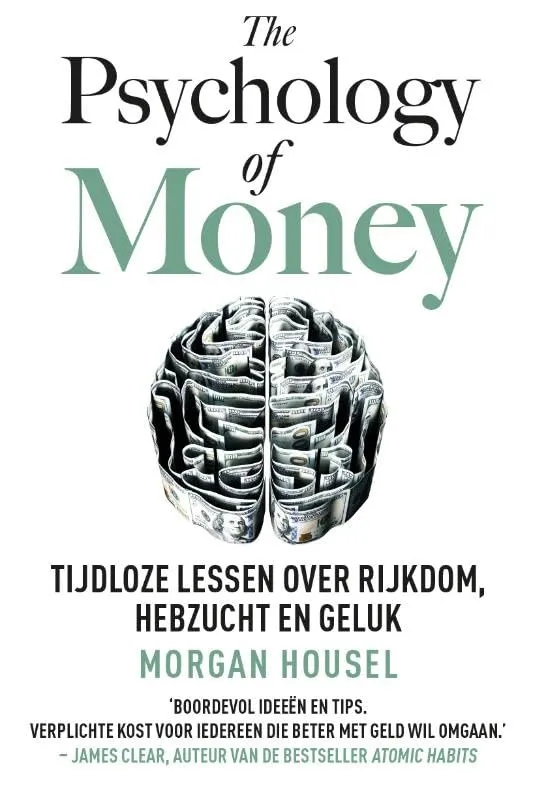
The Psychology of Money
Morgan Housel reveals the uncomfortable truth: your money problems aren't math problems—they're behavior problems. Through 19 short stories, he uncovers how childhood experiences, cultural beliefs, and unconscious patterns sabotage your financial life. This book isn't about getting rich quick; it's about understanding why you do what you do with money, so you can finally break free from the cycle.
Comprar Agora
Transparência: this post contains Amazon affiliate links. If you purchase through them, I receive a small commission — the price for you is exactly the same. Your support helps me continue creating free content about self-awareness, well-being, and mental health. I only recommend what I believe can make a difference in your journey.
presenca