Discover Kintsugi: 7 Ways to Heal Through The Break
The Japanese art of repairing pottery with gold reveals how our wounds can become our greatest beauty and strength.
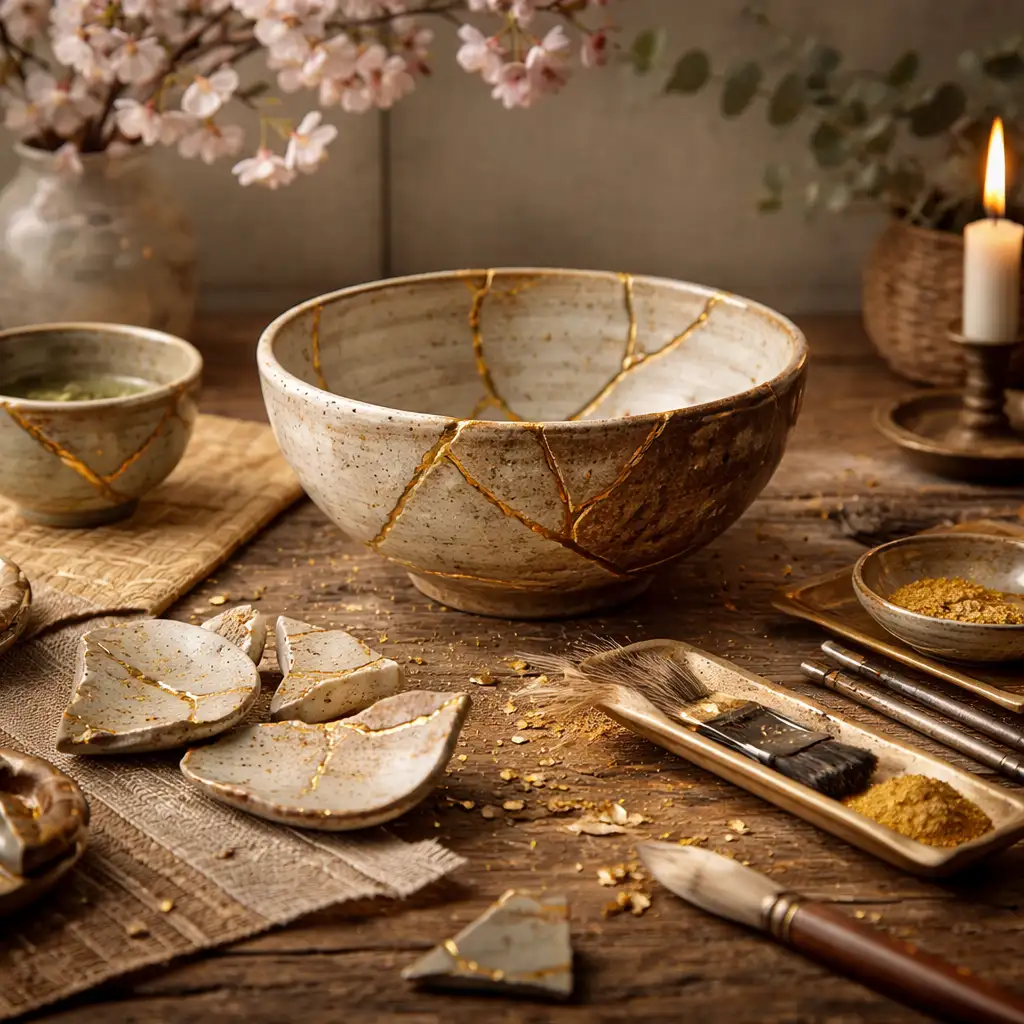
There’s a Japanese art called Kintsugi. When a bowl breaks, instead of discarding it or disguising the damage, artisans rebuild it with golden lacquer. The cracks don’t disappear, they become veins of gold, bright lines of memory that tell the object’s complete story.
No one hides that the bowl once broke. On the contrary: it becomes more valuable because of it. Because it carries within itself the courage of having existed, of having fallen, of having been reassembled with patience and beauty.
What if we were like that? What if our fractures could also shine?
1. Acknowledge what broke
Before repairing anything, you need to look at the pieces. Not with guilt, not with rush, just look. Recognize that something broke. That it hurt. That it’s different now.
There’s no shame in this. Life is made of impacts. Sometimes we break on the inside and keep standing on the outside. But the body knows. The heart feels. And when we finally stop and say “yes, something here ruptured,” we begin the way back.
Naming the pain is already an act of courage.
2. Let time do its work
In traditional Kintsugi, the broken pieces need to rest before being joined. The lacquer needs time to dry. Rushing the process ruins the restoration.
With us, it’s similar. There are wounds that can’t be stitched in a hurry. There are pains that need to be felt slowly, breathed, crossed through. Time doesn’t erase anything, but it softens, matures, makes it possible to hold what once burned too much.
Don’t force healing. It happens at its own pace, silent as a root growing beneath the earth.
3. Honor the scars
The golden lines of Kintsugi don’t try to imitate the original pottery. They acknowledge: “there was a break here.” And they make it visible, beautiful, worthy of being seen.
Your scars are not failures. They’re proof that you survived. That you felt deeply enough to be marked. That you’re still here, even after everything tried to shatter you.
Don’t hide what you’ve been through. Let it be part of your story. Because someone who looks at you and sees only perfection will never truly see you.
4. Choose beauty in the repair
You can rebuild yourself with harshness or with gentleness. You can build walls or bridges. The way you reconstruct yourself is a choice and it can be full of grace.
Not every scar needs to become armor. Some can become windows. Places where light gets in. Where others can see that you, too, know what it’s like to break and still choose to mend with tenderness.
5. Accept that you’re different now
After the break, you don’t return to what you were. And that’s okay. The restored bowl isn’t the same as the original, it’s something else: more conscious, deeper, truer.
You too. Maybe you laugh differently. Maybe you trust more carefully. Maybe you now know what you once ignored: that life hurts, yes, but also teaches. That you’re capable of bearing the weight of having survived.
It’s not about going back. It’s about becoming.
6. Share your story
There’s a moment, it doesn’t have to be now, when showing your cracks can become a gift. Not to expose your pain as a trophy, but to tell someone else who’s also broken: “you’re not alone.”
Sometimes, the greatest generosity we can offer is our raw humanity. Our flaws. Our imperfect reconstructions. Because when someone sees that you too carry veins of gold, they understand that it’s allowed to shine even while being marked.
Your story, when shared with intention, can be the light someone else needed to find their way.
7. Allow yourself to shine differently
A Kintsugi bowl doesn’t go back on the shelf trying to be like the other intact bowls. It shines with its uniqueness.
You don’t need to follow anyone else’s healing script. You don’t need to be inspirational in a specific way. You don’t need to turn your pain into a palatable lesson for others.
You can simply be you, scarred, in process, with your crooked golden lines, but yours. And that isn’t just enough. It’s extraordinary.
Practice: Ask yourself: “If I weren’t afraid of being different, how would I choose to live?” Take one small step in that direction today.
The break is part of the beauty
Kintsugi teaches us something radical in a culture obsessed with perfection: the break doesn’t diminish value, it increases it.
A Kintsugi piece is considered more valuable, more unique, more beautiful than it was before breaking. Not despite the cracks, but because of them.
The same applies to you.
Your wounds don’t make you less lovable. Your complicated story doesn’t disqualify you from happiness. Your scars don’t diminish your shine, they make it inimitable.
You don’t need to be whole to be loved. You don’t need to be healed to be valuable. You can be in process, in reconstruction, with golden lines still drying, and still be absolutely worthy.
Recommended Reading
If the Kintsugi philosophy resonates with you, this book will help you deepen your journey of applying these principles to daily life:
-
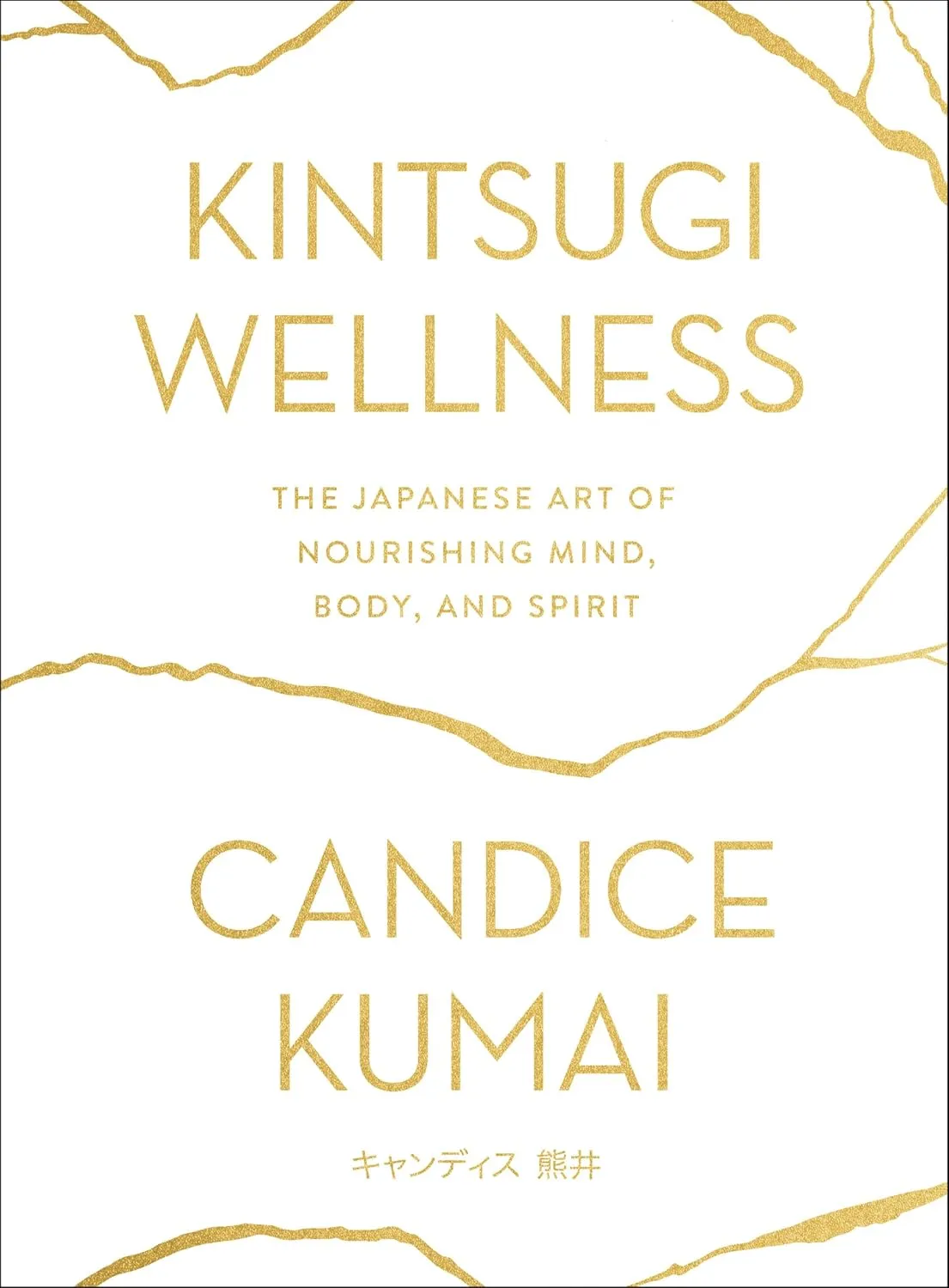
Kintsugi Wellness: The Japanese Art of Nourishing Mind, Body, and Spirit
Candice Kumai beautifully blends Japanese wisdom with practical self-care, showing how to apply the Kintsugi philosophy to nourish your mind, body, and spirit. A holistic guide to healing and thriving through life's breaks.
Buy Now